
Extract Text from Images (OCR) - Technologies and Tools - The Comprehensive Guide
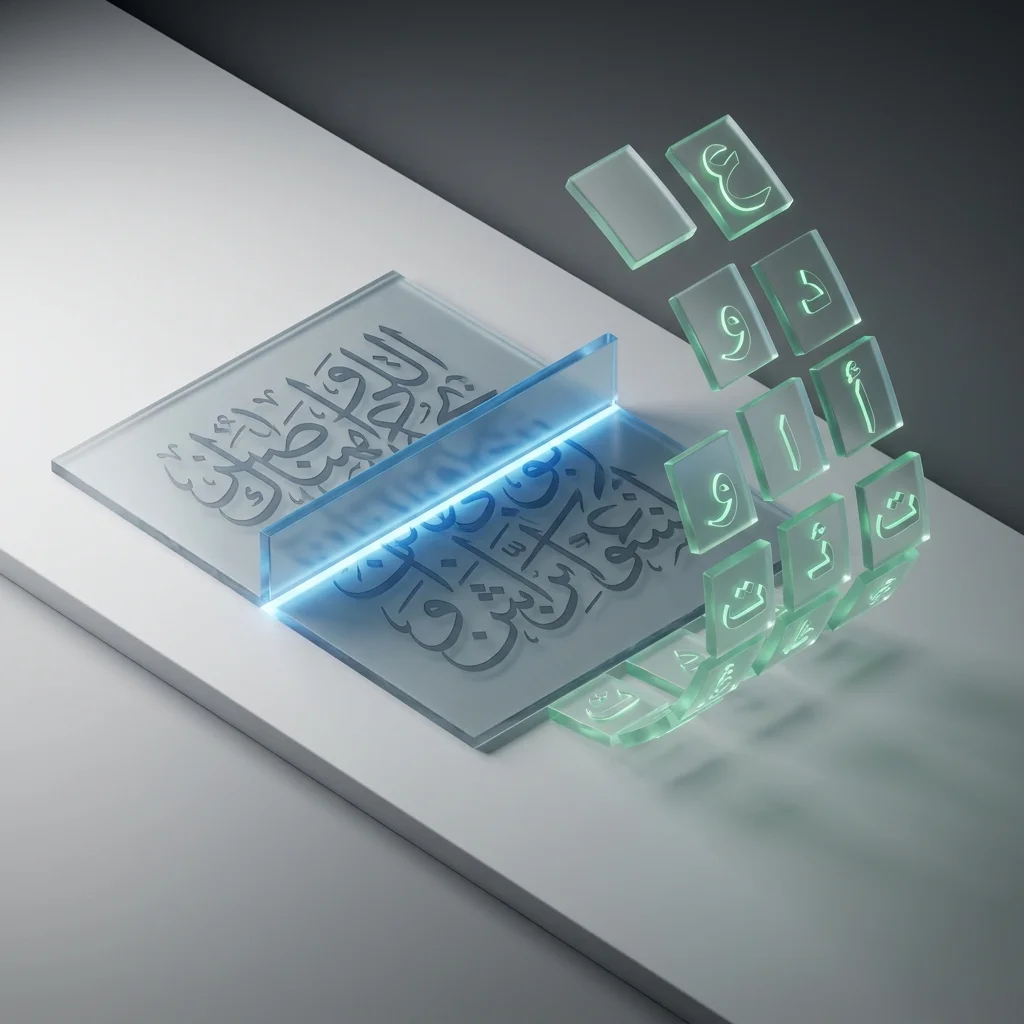
Have you ever encountered a PDF file containing highly valuable information for your research, only to discover it's "protected" or composed of "scanned images" that prevent you from copying the text? Or perhaps you have a batch of handwritten paper summaries you want to convert into a Word file to organize them? This is where "Optical Character Recognition" (OCR) comes into play—the magical technology that turns silent "pixels" in images into live, editable "data."
What is OCR and How Does it Work Technically?

OCR is a complex software process that goes through several stages to analyze an image and extract text from it:
- Pre-processing: The image quality is enhanced, noise is removed, and contrast is adjusted to allow the system to see the letters clearly.
- Segmentation: The system divides the image into lines, then words, then separate characters.
- Pattern Recognition: The system matches the shape of the character with a massive "dictionary" of stored patterns.
- Post-processing: Modern systems use artificial intelligence to predict the correct words based on context, correcting typos that might occur during analysis.
Extract texts from images with a button click
Use our free and smart tools to save your time and academic effort.
OCR Challenges with the Arabic Language
The Arabic language has long been considered the "archenemy" of traditional OCR technologies due to several technical reasons:
- Cursive Script: In Arabic, the shape of a single letter changes based on its position (beginning, middle, or end of the word), making it difficult for older systems to know where one letter ends and the next begins.
- Diacritics: The presence of dots and marks above and below letters confuses traditional algorithms, which might see them as "noise" in the image.
- Calligraphy: The variety of Arabic fonts like Ruq'ah, Naskh, and Diwani adds another layer of complexity.
However, thanks to "Deep Neural Networks" and the deployment of massive language models, Arabic OCR accuracy in 2026 has leaped to astonishing levels, approaching human accuracy, even with clear handwriting.

Vital Use Cases for Students and Researchers
For our academic community, OCR technology is not a luxury; it is a necessity for productivity:
- Digitizing Old References: Many core books and old researches in Arab libraries are not available digitally. Using OCR allows a researcher to index these books and search within them instead of tedious manual reading.
- Extracting Texts from Screenshots: While attending online lectures (Zoom/Teams), a student sometimes just takes a "screenshot" of the slides. Using OCR, these images can later be converted into written notes.
- Dealing with Protected PDFs: When a website's policy prevents you from copying text, you can simply take a screenshot of the text and upload it to our OCR engine to get the content instantly.
Tips to Achieve the Best Text Extraction Accuracy
To ensure Arabic text comes out perfectly with minimal errors:
- Good Lighting: If you are photographing a paper with your phone, ensure there is sufficient lighting and no shadows cast over the text.
- Camera Angle: Try to keep the camera perfectly parallel to the paper to avoid distortion in the corners of letters.
- Source Language: Ensure "Arabic Language" is selected in the tool's settings, as this activates the Arabic dictionaries that help the algorithm predict words correctly.
- High Resolution: Low-quality (Pixelated) images cause "gibberish" in the outputs; always upload the clearest images possible.
The Future of OCR: Towards Full Content Understanding
We are now moving from the "character reading" phase to the "meaning understanding" phase. Upcoming technologies (Intelligent Character Recognition - ICR) do not just extract text, but also:
- Layout Preservation: Extracting tables, graphs, and margins in the exact same layout as the original paper.
- Instant Translation: Once Arabic text is extracted, AI can instantly translate it into any other language or summarize it for you.
- Entity Extraction: Automatically recognizing dates, names, and monetary amounts within official documents.
Conclusion: Digitize Your World Smartly
Our world is full of text "trapped" inside images and papers. OCR technology is what frees this data, making it usable in your research and work. We at "Adawati" are proud to offer an OCR engine that supports Arabic with superior accuracy, for free and without any restrictions, to empower students and researchers to access knowledge and liberate it from the confines of traditional images.