
Audio to Text Conversion with AI - The Comprehensive Guide 2026
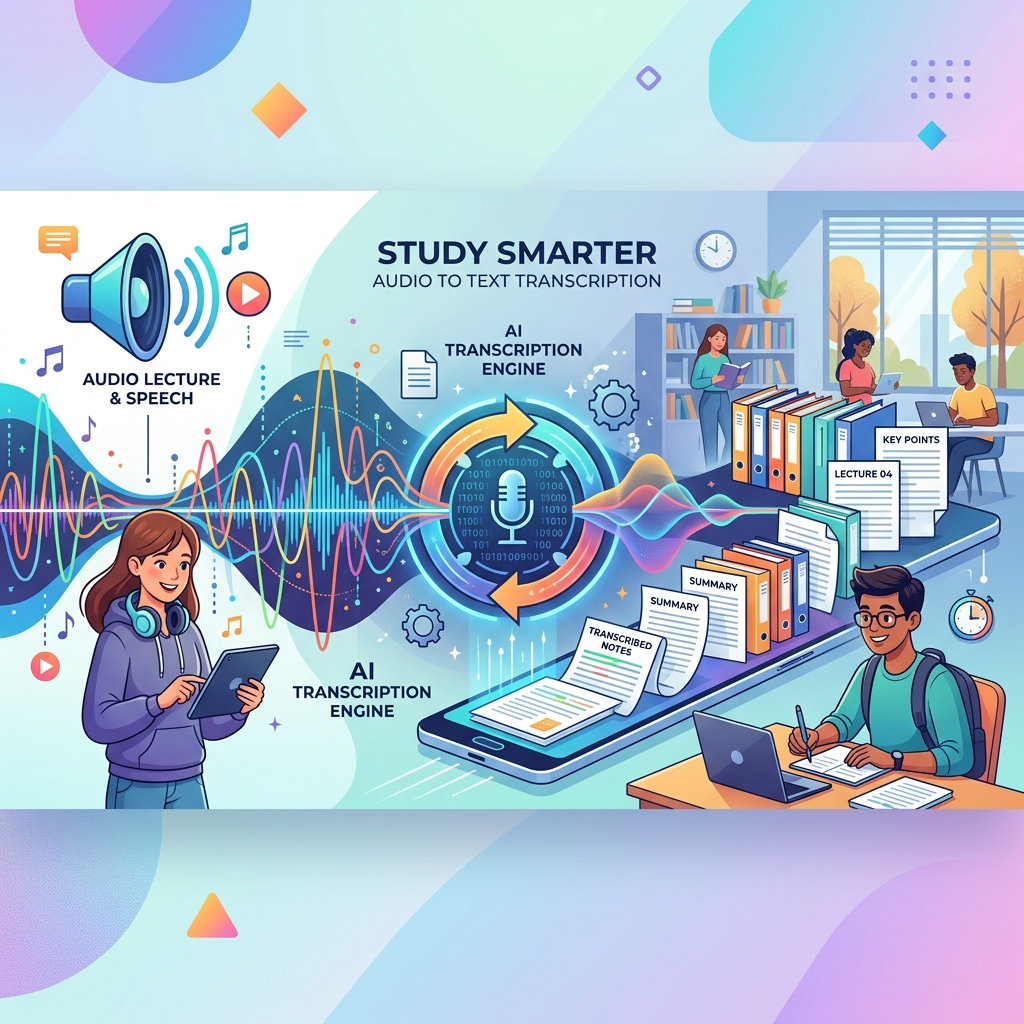
The task of manually converting audio recordings and lectures into written text has been one of the most time-consuming and exhausting tasks in academic and professional history. In the past, transcribing one hour of audio required at least 4 to 5 hours of grueling handwriting. Today, however, thanks to quantum leaps in AI-powered Speech-to-Text (STT) technologies, we can convert long lectures into digital documents in mere seconds with astonishing accuracy.
The Technological Revolution in Arabic Speech Recognition
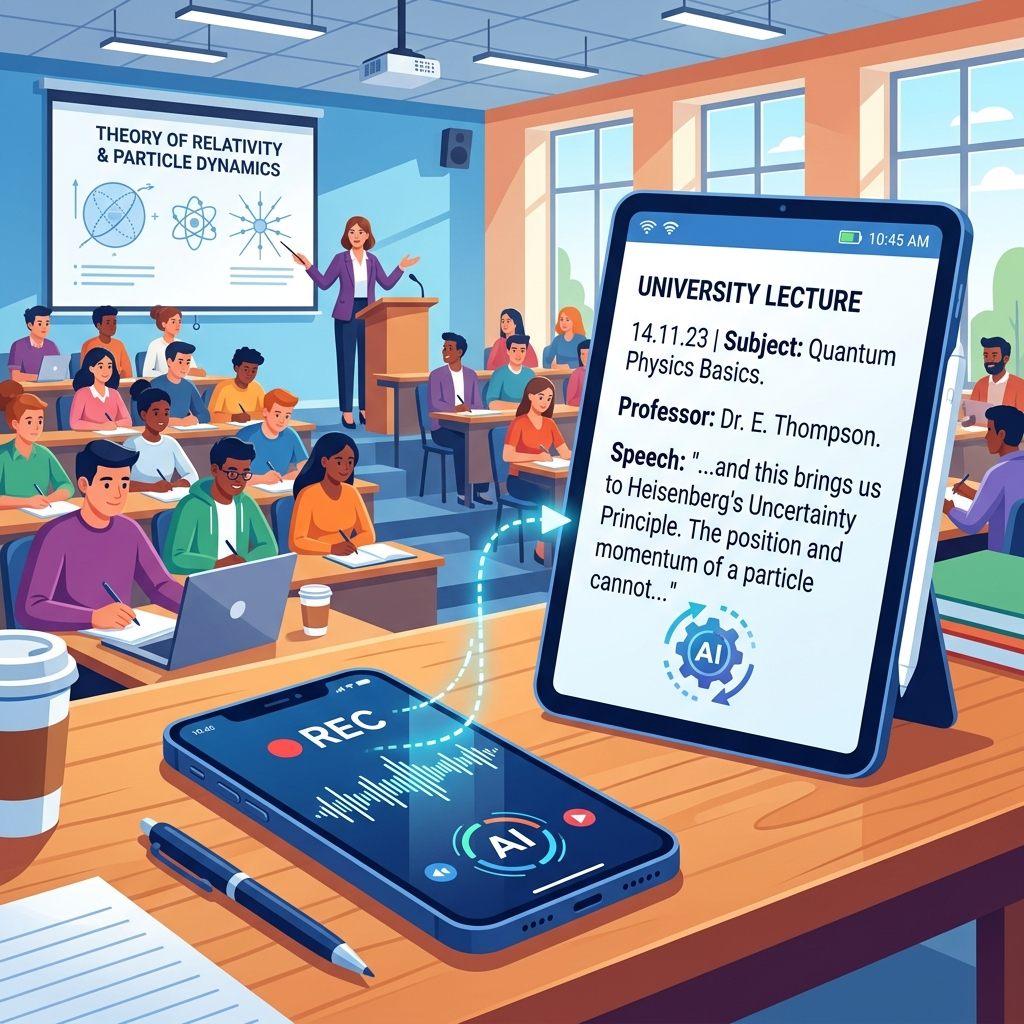
Speech recognition systems have always faced massive challenges with the Arabic language, given its complex derivational nature, the absence of "diacritics" in everyday writing, and the stark difference between colloquial dialects and Modern Standard Arabic (MSA). However, modern models like Whisper AI and advanced Transformer models customized for Arabic have successfully broken this barrier.
Today, smart tools do not just understand MSA; they are capable of comprehending local dialects (Saudi, Gulf, Egyptian, and Levantine) with an accuracy exceeding 95%. This means a student recording a lecture delivered by a professor speaking in a colloquial dialect will receive an incredibly accurate and highly understandable, formatted text.
Transcribe your audio lectures to text for free
Use our free and smart tools to save your time and academic effort.
The Importance of Audio to Text for Students and Researchers
For a university student, time is their most precious resource. Here is how automated audio transcription contributes to doubling your productivity:
- Full Focus During Lectures: Instead of being preoccupied with frantically writing behind the professor and missing core points, you can rely on audio-recording the lecture (with permission) and later converting it to full text. This allows for genuine "mental presence" inside the classroom.
- Easy Content Searchability: Digital text grants you the search function (Ctrl+F). Imagine looking for a specific technical term mentioned in a lecture two months ago; you can find it in one second instead of listening to hours of recordings.
- Converting Voice Notes into Research Drafts: Many researchers prefer "thinking out loud." You can record your thoughts while driving or walking, then convert them to text and format them to become part of your research or academic thesis.

AI Applications in Journalism and Investigation
Journalists are the group that benefits the most from this technology after students. Press interviews that once required an army of transcribers are now processed instantly with the click of a button. The advantage here is not just speed, but "Digital Security":
- Absolute Confidentiality: Local (On-device) tools or those that rely on instant processing without storage ensure sensitive interviews do not leak.
- Time-stamping: Advanced systems link every written sentence to the exact second it was spoken in the audio file, making it 100% accurate to verify quotes.
Accuracy Challenges and How to Overcome Them
Despite the evolution of AI, certain factors can affect the quality of outputs. Here are golden tips to ensure the best result:
- Recording Quality: The closer the microphone is to the speaker and the farther from hall echo and student noise, the higher the accuracy.
- Speaking Rate: Speaking clearly without overlapping speech from multiple people helps the algorithm correctly separate speakers (Diarization).
- Using Foreign Terms: Bilingual models excel at understanding English terms interspersed in Arabic explanations in scientific colleges (Medicine, Engineering, Computer Science).
The Future of Audio Transcription: From Text to Summarization
We are not stopping at merely converting audio to text. The future lies in "Deep Understanding." Modern tools are now beginning to:
- Transcribe Text: Converting audio into written data.
- Automated Summarization: Extracting the main points of a lecture into concise bullet points.
- Task Identification: Extracting a "To-Do List" or recommendations mentioned in a meeting or lecture.
Conclusion: No More Exhausting Handwriting
Relying on smart tools to convert audio to text is not "laziness," but rather a supreme investment of time. The outstanding student is the one who bends technology to their advantage, leaving ample time for analysis and comprehension instead of spending hours on routine tasks like writing. We at "Adawati" recognize this need, which is why we provided a powerful engine that fully supports Arabic to assist you in your educational journey.